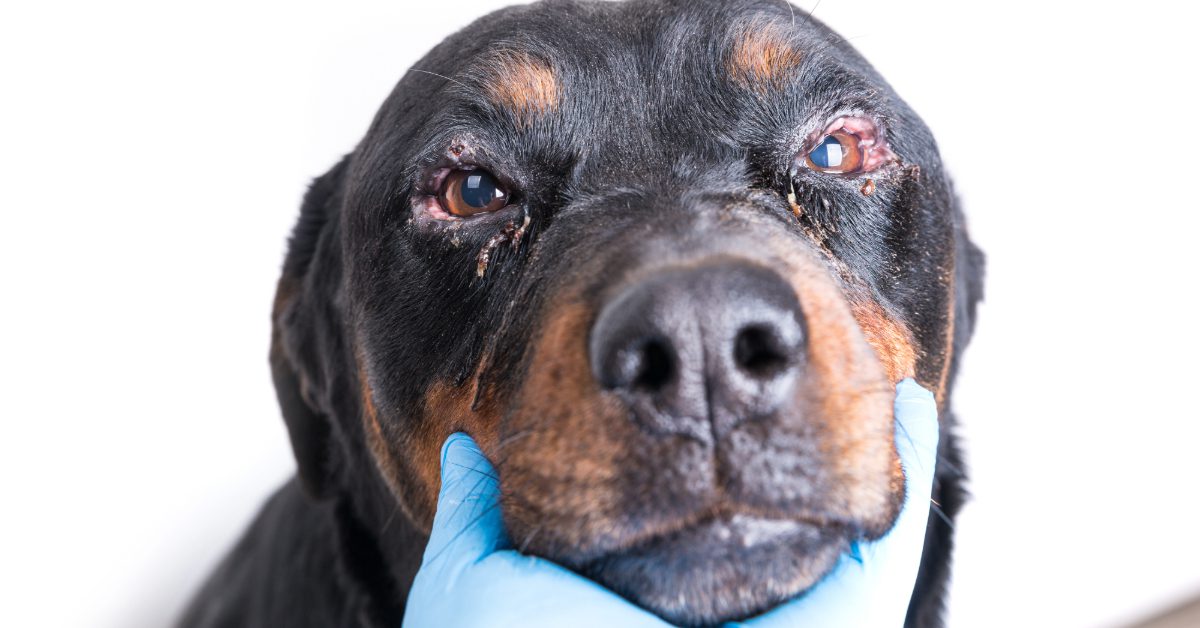
You glance over and notice a crusty residue tucked in the corners of your dog’s eyes, or maybe a damp trail running down from underneath, and naturally you start to wonder if something’s wrong. Dog eye discharge refers to any fluid, whether clear, mucus-like, or thick and colored, that collects around the eyes, and it almost always comes down to one of two things: your dog’s eyes are simply doing their job and flushing out everyday debris, or an underlying irritation, allergy, or infection is at play. A small amount of clear discharge, especially in the morning, is rarely cause for concern, but discharge that’s thick, colored, constant, or paired with redness, squinting, or swelling is a sign it’s time to schedule a visit with Animal Hospital of Lake Villa rather than wait and see if it clears up on its own.
Why Does My Dog Have Eye Discharge?
Eye discharge in dogs can range from a barely noticeable clear film to thick, crusty buildup in the corners of the eyes. The cause behind your dog’s eye discharge usually falls into one of a few categories, and understanding which one applies to your dog is the first step toward relief.
Normal, Minor Discharge
A small amount of clear or slightly tinted discharge, especially first thing in the morning, is common and usually nothing to worry about. This type of dog eye discharge is simply the eye clearing out dust, debris, or loose hair overnight.
Allergy-Related Discharge
Watery discharge in both eyes, paired with redness or pawing at the face, often points to environmental allergies rather than infection. This kind of eye discharge tends to flare up seasonally in Lake Villa, particularly during high-pollen months.
Infection-Related Discharge
Thick yellow or green eye discharge, especially in just one eye, is a strong indicator of a bacterial infection or irritation from a foreign object. This type of discharge often comes with squinting or visible discomfort.
Common Causes of Dog Eye Discharge
- Seasonal or environmental allergies
- Blocked tear ducts or abnormal eyelid structure
- Foreign debris like grass seeds or dust
- Bacterial or viral eye infections
- Breed-related issues, common in flat-faced and long-haired breeds
When to See a Vet for Dog Eye Discharge
Knowing when to see a vet for dog eye discharge comes down to watching for changes in color, consistency, and accompanying symptoms. A quick visit to Animal Hospital of Lake Villa can rule out anything serious and get your dog comfortable again.
- Discharge that’s thick, yellow, or green
- Discharge in only one eye
- Visible redness, swelling, or cloudiness
- Your dog squinting, pawing, or avoiding light
- Discharge that persists for more than a day or two
How We Evaluate Eye Discharge in Dogs
When you bring your dog in for eye discharge, our veterinary team examines the eye structure, checks for foreign material, and assesses tear production before recommending treatment. Because so many conditions can cause similar-looking discharge, an in-person exam is the most reliable way to get an accurate diagnosis rather than guessing based on appearance alone.
Caring for Your Dog’s Eye Health Going Forward
Most cases of dog eye discharge clear up quickly once the underlying cause is addressed, especially when caught early. If you’ve noticed ongoing or unusual discharge in your dog’s eyes, call us at (847) 356-8387 or book an appointment online. Our team at Animal Hospital of Lake Villa is ready to take a closer look and help your dog see clearly and comfortably again.
About Us
Animal Hospital of Lake Villa has provided compassionate, personalized pet care since 1993. Our Fear Free-certified, AAHA-accredited team helps every pet, even the nervous ones, feel safe and at ease.